Authored by Mr. Laeeq Siddique — Leading SAP S/4HANA Innovation & Strategy
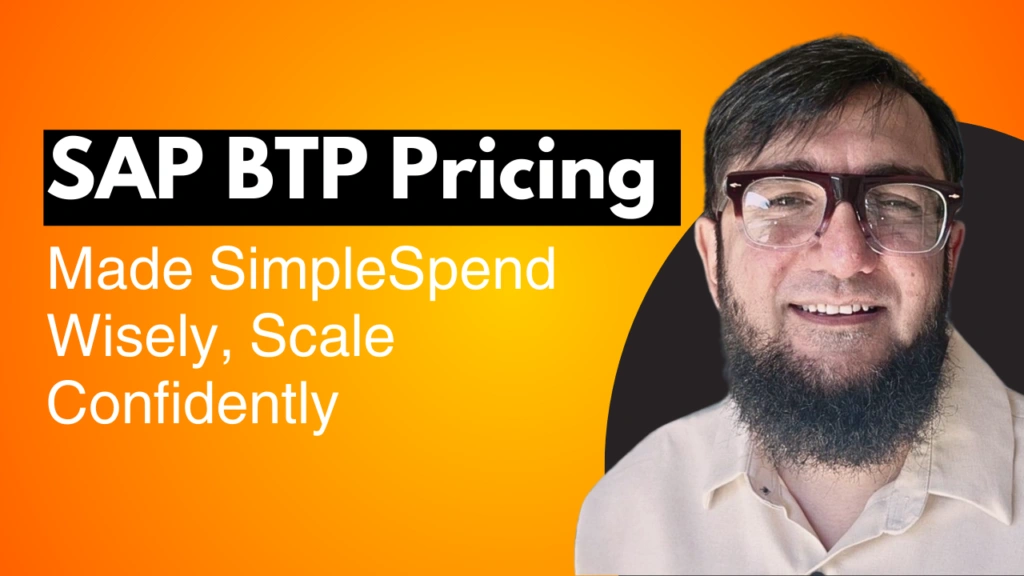
Choosing an SAP BTP pricing model based only on the lowest upfront cost can create a much bigger bill later. The right option depends on what you’re running, how much you consume, and how your BTP landscape is expected to grow.
For SAP teams planning new applications, integrations, extensions, or larger cloud workloads, understanding the difference between SAP BTP pricing models is more than a budgeting exercise. It can affect how predictably you control costs as usage grows.
I’ve received several requests to break down SAP BTP pricing, so this post focuses on what actually matters when comparing the available models, where costs can change, and how to choose an approach that fits your SAP environment.
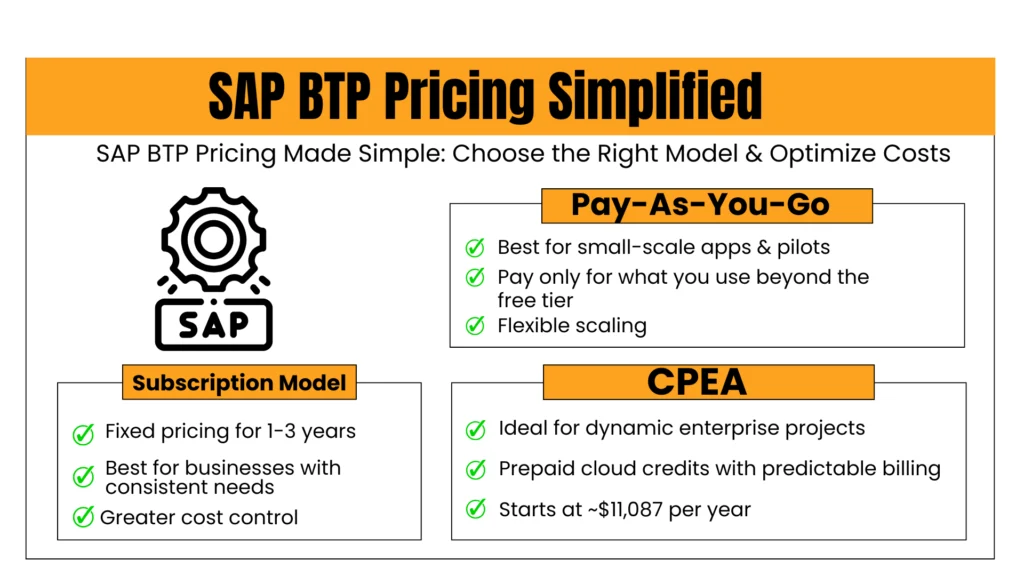
Understanding SAP BTP Pricing & Making the Right Choice for Your Cloud Strategy
Pay-As-You-Go
Pay-As-You-Go is designed for organizations that want to start using SAP BTP without an upfront annual commitment. SAP describes it as a zero-commitment consumption model with no minimum usage requirement. You pay for the eligible services you use, with billing occurring monthly in arrears. SAP also states that service charges under this model are non-discountable.
This model can make sense when your BTP workload is still developing, when you are validating a new use case, or when you want to avoid committing to a specific level of annual consumption before your usage pattern is clear.
The important point is that Pay-As-You-Go does not automatically mean “cheap.” It means flexible. If your application, integration landscape, or service consumption grows significantly, your monthly bill can grow with it.
CPEA
The Cloud Platform Enterprise Agreement (CPEA) is a prepaid cloud-credit model designed for customers with established SAP BTP use cases. Instead of committing to one individual service, the organization purchases cloud credits that can be consumed across eligible SAP BTP services.
SAP describes CPEA as providing flexibility to switch services during the contract period. Usage is tracked through monthly balance information, while consumption is deducted from the available cloud-credit balance. SAP also notes that minimum investment requirements and volume-based discounts can apply.
For an organization with several BTP workloads, this flexibility can be more useful than purchasing isolated services individually. However, the financial benefit depends on actual consumption, contract terms, eligible services, and the amount committed.
SAP BTP Enterprise Agreement (SAP BTPEA)
One important addition to any current SAP BTP pricing discussion is SAP BTP Enterprise Agreement, or SAP
BTPEA.
SAP BTPEA is also a prepaid cloud-credit model with an annual commitment. SAP positions it for customers with well-established and planned BTP use cases that want flexibility to switch between eligible services instead of being tied to one service throughout the contract. Usage is tracked through monthly balance statements, and consumption is deducted from the available cloud-credit balance. SAP also states that BTPEA has a minimum investment entry and that volume-based discounts are available.
There is another important consideration: SAP states that overages under BTPEA are billed in arrears at list price. Customers can top up their cloud credits to help prevent overages. That makes consumption monitoring an important part of the Cost M-SAP
Subscription
The subscription-based model is different from the consumption-based models.
With a subscription, an organization subscribes to specific SAP BTP services for a fixed price and period, typically one to three years. The organization pays the agreed fixed cost regardless of how much of the subscribed service it consumes. Additional services may require a contract modification.
This can be attractive when the required services and expected usage are relatively predictable. The trade-off is flexibility: unlike the consumption-based model, you are not simply moving your spending between eligible services as your requirements change.
SAP BTP Pricing Model Comparison
| Pricing model | Best for | Upfront commitment | Billing approach | Flexibility |
|---|---|---|---|---|
| Pay-As-You-Go | POCs, pilots, uncertain workloads | Low / no annual commitment | Monthly in arrears | High |
| CPEA | Established BTP consumption | Prepaid cloud credits | Consumption against credits | High |
| SAP BTPEA | Enterprise BTP adoption | Annual commitment | Cloud-credit consumption | High |
| Subscription | Predictable service requirements | Fixed contract | Fixed price | Lower |
You pay only for what you use beyond the free tier, with the flexibility to scale. For more on cloud vs. on-premises options, check out Choosing Between S/4HANA On-Premise and Cloud.
Key Insight: SAP BTP is a Platform-as-a-Service (PaaS) that extends and integrates SAP applications. It runs on hyperscaler platforms like Azure, AWS, or Google Cloud, allowing you to purchase services either through SAP or directly from the hyperscaler for more granular cost control.
For example, you can integrate Azure Database for PostgreSQL or AWS RDS with your BTP setup, combining services for optimized performance and savings.
SAP BTP Pricing Checklist Before You Sign a Contract
Before selecting a commercial model, ask your SAP team or implementation partner to document the following:
- Which SAP BTP services will the solution actually use?
- Which service plan applies to each service?
- Which consumption metric does each service use?
- Which SAP BTP region will host the workload?
- What is the expected development consumption?
- What is the expected production consumption?
- How quickly is that consumption expected to grow?
- Which services are available under the selected commercial model?
- Is a free-tier plan available for development or testing?
- What happens if consumption exceeds the committed amount?
- How will your team monitor monthly consumption?
- What happens if your architecture changes and you need additional services?
This exercise can expose cost risks before they become contract or production problems.
How to Choose: Before choosing a plan, evaluate your SAP BTP pricing options carefully. Ask your development partner to compare services, including open-source alternatives, to avoid overpaying.
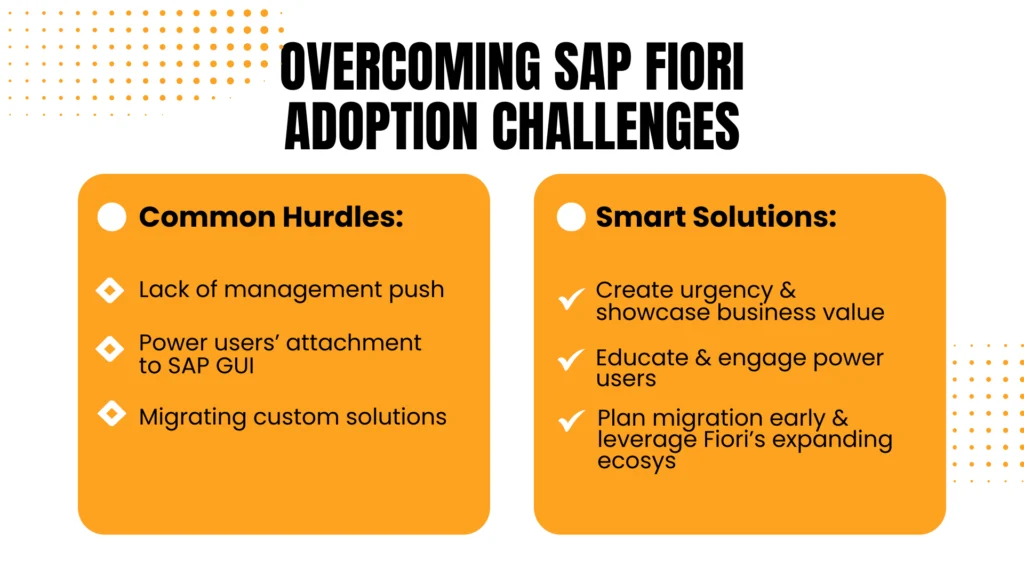
Stay tuned: We’ll soon publish a deep-dive on SAP BTP pricing models to help you choose the most cost-effective solution for your business. Don’t miss our other post on: 5 Major Hurdles in Adopting SAP Fiori After S/4HANA
Frequently Asked Questions
1. What is SAP BTP pricing based on?
SAP BTP pricing depends on the commercial model, the services and service plans selected, and the applicable consumption or subscription terms. Consumption-based models charge according to eligible service usage, while subscription-based models use fixed pricing for subscribed services.
2. How does SAP BTP Pay-As-You-Go work?
Pay-As-You-Go allows organizations to use eligible SAP BTP services without an upfront annual commitment or minimum usage requirement. SAP states that customers are billed monthly in arrears for the services they use.
3. What is the difference between CPEA and Pay-As-You-Go?
Both are consumption-based commercial models, but their financial commitment differs. CPEA uses a prepaid cloud-credit commitment, while Pay-As-You-Go has no upfront payment, no minimum usage requirement, and no annual commitment.
4. What is SAP BTPEA?
SAP BTPEA, or SAP BTP Enterprise Agreement, is a consumption-based commercial model using prepaid cloud credits with an annual commitment. SAP positions it for customers with established and planned BTP use cases that need flexibility across eligible services.
5. Is SAP BTP subscription-based or consumption-based?
SAP BTP supports both. SAP currently describes consumption-based options as SAP BTPEA, CPEA, and Pay-As-You-Go, while the subscription-based model provides access to specific subscribed services for a fixed price and period.
6. What is the SAP BTP free tier?
The SAP BTP free tier provides eligible free service plans within consumption-based enterprise accounts. These plans have defined scope and capacity and are intended to help customers explore BTP capabilities before moving to paid capacity.
7. What is the difference between SAP BTP trial and free tier?
SAP designed trial accounts for personal exploration and non-production testing, while eligible consumption-based enterprise accounts can use free-tier service plans. SAP does not allow customers to use trial accounts for production or team development.
8. Can SAP BTP costs increase as usage grows?
Yes. Consumption-based costs can increase when service usage increases. Under SAP BTPEA and CPEA, SAP states that overages can be billed in arrears at list price, making consumption monitoring important.
9. How can I estimate SAP BTP costs before deployment?
Start by identifying the required services, service plans, region, expected consumption, and commercial model. Then use SAP’s Discovery Center service catalogue and available estimators to validate service availability and pricing.
10. Which SAP BTP pricing model is best for an enterprise?
There is no universal answer. Established organizations with planned consumption may evaluate SAP BTPEA or CPEA, while organizations with uncertain usage may prefer Pay-As-You-Go. Subscription can be appropriate when the required services and usage are predictable. The final decision should be based on the organization’s architecture, consumption forecast, contract terms, and required flexibility.