
Which RISE with SAP Tenancy Model Is Right for You?
Posted on December 9, 2025 by Laeeq Siddique
Introduction
Selecting the right RISE with SAP tenancy model is a critical choice for an organization. Furthermore, if they wants to exploit its cloud strategy to the fullest potential. RISE with SAP is a flexible, personalized offering that simplifies your transition to the cloud based on your business transformation needs to run clean, grow and protect.
This blog provides a deep dive into various RISE with SAP tenancy models. It offers a complete guide to help you select the best model for your company. We’ll cover cloud services, deployment models, and the differences between private and public cloud computing. By the end, you’ll have a clear understanding to make an informed decision.
Demystifying RISE with SAP Tenancy Models
The key to RISE with SAP is the ability to provide custom-fit cloud solutions for your unique business. Existing tenancy models cater for the ultimate in business flexibility, however where organizations may either maintain complete control over their infrastructure or share it with others.
Key Components:
Cloud Services: These are SAP’s enterprise applications, data management tools and integration services that live in the cloud.
Deployment Models: This is how cloud resources are operated and distributed (public vs private).
Tenancy Options: Specifies the type of cloud that you are using shared versus dedicated, and how resources are assigned to your company.
Each of these ingredients has a big impact on which RISE with SAP tenancy model is appropriate for your business requirements.
Comparing Deployment Models
To narrow down which tenancy model is the right fit for your needs.
Here’s a comparison of the main deployment models:
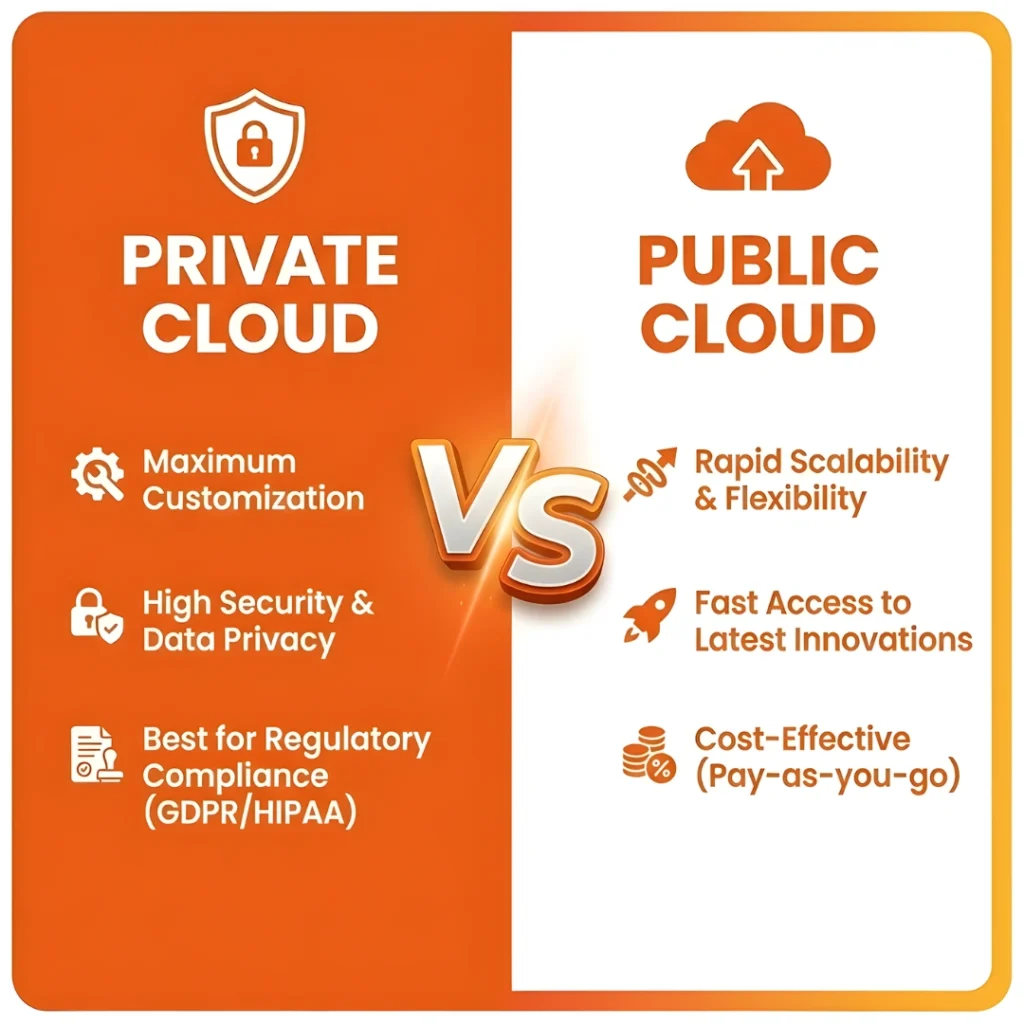
Private Cloud
At the same time, Microsoft also offers a Private Cloud product for building your own cloud environment used by no other customer than you. It lives on-premises or in a private data center and provides your company with greater control over IT infrastructure.)
Advantages of Private Cloud:
- Improved security:
In addition, Cloud is hosted on dedicated servers so you can have access to higher levels of data privacy and security. - Customization:
With a private cloud you have a greater ability to customize your applications and environment to fit specific business needs. - Regulatory Compliance:
Private cloud implementations are good for organizations that have to work within the constraints of stringent data protection policies, such as GDPR or HIPAA.
Best For:
Companies who have very strict data privacy laws and companies that need a lot of customization for complex business processes.
Public Cloud
Public Cloud is shared among different customers, as such your company gets divvied up and wedged into its cloud capacity. The providers of public clouds are often third party companies.
Advantages of Public Cloud:
- Cost Efficient: Public clouds are cost-effective because you share resources with other companies. It uses a pay–as-you-go model which makes it scalable and cost-effective for businesses.
- Scalable: Public cloud services can easily accommodate rapidly changing needs and are perfect for businesses that have varying workload requirements.
- Innovation and velocity: Public clouds are usually available with new innovations and technologies, allowing enterprises to take advantage of bleeding-edge capabilities. However, without the associated burden of embodiment.
It is best for Small to mid-sized businesses or institutions who have intermittent workload periods. Whether they are looking for an affordable, flexible solution.
Private Cloud Vs Public Cloud: The Definitive Comparison
Benefits of Private Cloud:
- Exclusive Resources: With the private cloud, dedicated resources are available as per your business requirement which results in better performance and efficiency.
- More control over data: You own your own data, so sensitive information stays secure and compliant with regulations.
- Customization Organizations are able to customize their private cloud infrastructure to fit specific requirements. It also provide more flexibility in configurations and optimizations.
Advantages of Public Cloud:
- Cost Savings: Public clouds dramatically decrease upfront capital required to operate infrastructure on-premise. You pay as you go, which makes it a little cheaper.
- More Flexibility: With a public cloud, you can scale services up or down as your business changes (or experiences seasonal fluctuations).
- Innovation: Public cloud providers are very aggressive in rolling out new features and capabilities, which keep your business at the forefront of industry trends.
Which Model is Right for You?
Evaluate Business Objectives and Compliance Needs:
- If security for your data and industry regulation is of the utmost importance then a private cloud will be most suitable.
- If the focus is on cost, flexibility, and scalability, a Public Cloud may be the way to go.
Think about the Cost vs. Control:
- Private clouds do provide more control, but at a higher cost in operations.
- Public clouds are cheaper but entail less control over the infrastructure.
Evaluate Long-Term Scalability Needs:
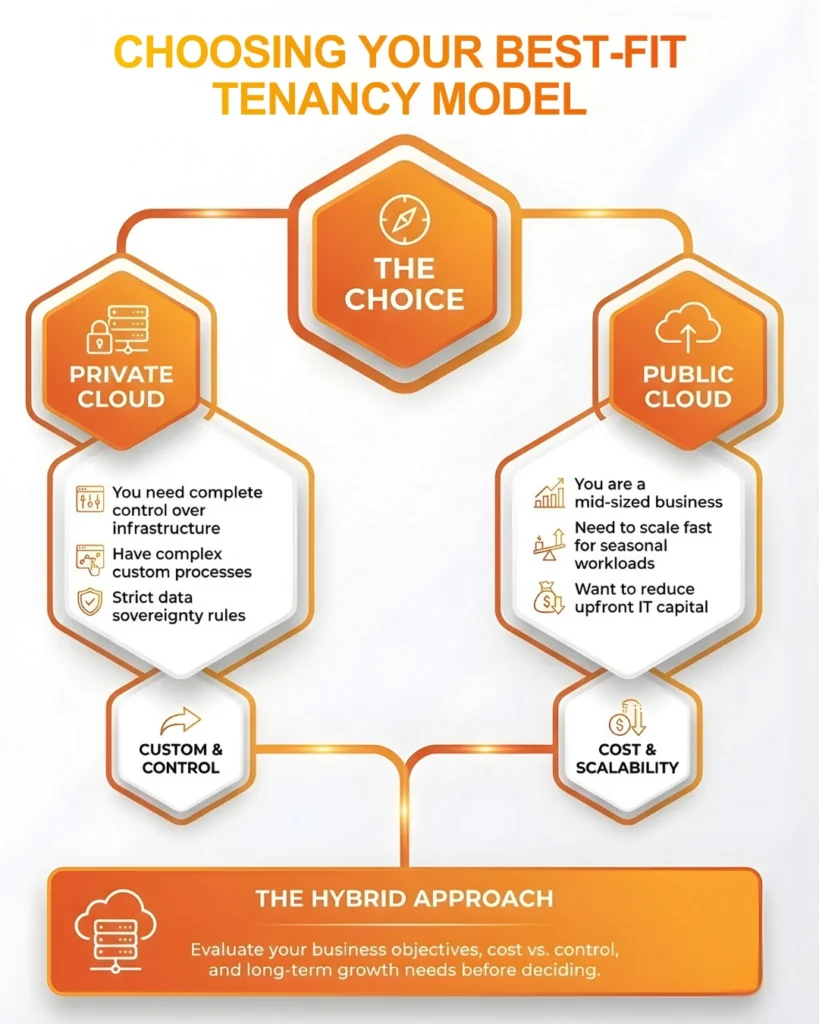
- If you’re company expecting high growth or with demand that varies, more scalability is possible in Public Cloud environments.
- For organizations with stable operations that require a customized infrastructure, a Private Cloud may be the best long-term solution.
Moreover, by considering these factors, you will be able to decide which RISE with SAP tenancy model best for your business strategy.
Conclusion
To sum up, Choosing the correct RISE with SAP tenancy model is essential to maximize the benefits of your cloud transformation. A Private Cloud gives you control and security. A Public Cloud allows you to save money and scale quickly. Both cloud types offer unique perks that can significantly enhance your business.
However, by examining your business-driven use cases, compliance requirements, and scalability objectives you can make the best choice. By choosing the proper tenancy model, you are positioning your company for years of future success in a market that is evolving.
Cremencing Solutions is an SAP custom development leader that can help you navigate the full RISE with SAP transformation to a solution that meets your exact requirements.
If you are looking for customized development or expert advice to ensure your RISE with SAP journey is a success, we have got you covered.
For more insight on SAP read our Blog Why Would You NOT Recommend SAP as an ERP Software?
FAQs
What types of RISE with SAP tenancy models are there?
RISE with SAP tenancy models articulate how SAP cloud services are set up and operated, depending on whether a private or public cloud model is selected. These models dictate how resources are managed and how much control you have over your cloud environment.
How do I choose between public or private cloud?
If you need complete control over data and resources, a Private Cloud is a better fit. If your focus is saving costs, and if you are looking to scale-up quickly – then maybe a public cloud is the best solution for you.
What are the benefits of enabling a Private Cloud with RISE with SAP?
Private Cloud provides more control over data and enhanced security with customization. It would be most useful to companies with particular compliance needs, or that have a desire to use dedicated resources.
What is the primary advantage when selecting a Public Cloud and RISE with SAP?
Public Cloud is cost-effective with dynamic workloads that fluctuate. However, it offers flexibility and scalability which perfectly fits businesses and organizations which require resources to be rapidly adjusted.
Resources
SAP RISE Official Page
SAP Activate Methodology
Deployment Models Overview
📩 Subscribe to Our Newsletter
Get the latest updates, tips, and insights delivered straight to your inbox.