Authored by Mr. Laeeq Siddique — Leading SAP S/4HANA Innovation & Strategy
Is SaaS vs Custom Solution for SAP ERP the right debate for your business? Many companies opt for SaaS over custom solutions, often drawn by two seemingly straightforward benefits:
1. 𝗣𝗿𝗲𝗱𝗶𝗰𝘁𝗮𝗯𝗹𝗲 𝗖𝗼𝘀𝘁𝘀: Subscription fees stay fixed and often cover maintenance, hosting, and regular updates, so you avoid unexpected costs.
2. 𝗠𝗮𝗻𝗮𝗴𝗲𝗱 𝗨𝗽𝗴𝗿𝗮𝗱𝗲𝘀: Vendors handle the heavy lifting on maintenance and upgrades, saving your IT team time and resources.
Why SaaS Appears Simpler at First
SaaS ERP changes the traditional responsibility model. The software provider operates the underlying application environment, manages much of the infrastructure, and delivers updates according to its product lifecycle. For organizations that previously operated heavily customized on-premise systems, this can reduce infrastructure administration and remove some upgrade activities from the internal IT workload.
The financial model can also seem easier to forecast because contracts establish licensing or subscription charges in advance. However, predictable subscription pricing does not automatically mean predictable total cost. An enterprise may still need integration services, additional cloud services, implementation partners, data migration, identity management, monitoring, testing, reporting, and extensions.
The difference becomes more important when the ERP system connects with a large application landscape. A manufacturing company, for example, may connect SAP with warehouse management, transportation systems, banking interfaces, tax platforms, e-commerce applications, supplier networks, and internal approval systems. The SaaS subscription may be straightforward, while the architecture surrounding it is not.
What a Custom SAP ERP Solution Actually Means
The term “custom solution” can describe several architectures, and treating them as one category leads to poor comparisons. Traditional SAP ERP customization may involve custom ABAP development, reports, enhancements, user exits, interfaces, or separate applications. Modern SAP architecture increasingly separates business differentiation from the ERP core instead of placing every requirement directly inside it.
For SAP S/4HANA environments, organizations can implement custom functionality through supported extensibility models. SAP describes key-user extensibility and developer extensibility as on-stack approaches, while side-by-side extensions run on SAP BTP and communicate with the ERP system through remote interfaces.
This means an enterprise does not necessarily have to choose between an entirely standard SaaS system and a heavily modified ERP core. Standard SAP functionality can handle common processes, while organizations can implement differentiated capabilities through governed extensions.
Why SaaS vs Custom Solution for SAP ERP Requires More Analysis
ERP costs become difficult to control when a standard cloud application cannot accommodate an organization’s processes without additional integrations, extensions, or manual workarounds. The problem is particularly visible in SAP environments, where finance, procurement, sales, supply chain, HR, analytics, and external applications often depend on shared master data and connected business processes.
For SAP decision-makers, the question is not simply whether SaaS or custom software has a lower subscription or development cost. The more relevant question is how well the solution fits the required business process, integration architecture, security model, data ownership, and future SAP roadmap. This article examines SaaS ERP, SAP ERP customization, SAP S/4HANA Cloud, SAP BTP extensions, and clean-core principles so architects and IT managers can evaluate the trade-offs using a complete enterprise view.
Standard Processes May Not Cover Differentiating Requirements
SaaS ERP products follow standardized processes, which can reduce custom development when an organization adopts the standard process.
The situation changes when a company depends on specialized operational processes. A manufacturer may require a unique production approval flow, a distributor may need specialized pricing logic, and a service organization may depend on a proprietary contract or billing process. The organization must determine whether to redesign the requirement to fit the standard process, handle it through configuration, implement it through an extension, or retain it as a separate application.
This is where SAP clean-core architecture becomes relevant. The objective is not to eliminate business-specific functionality, but to place it in an architecture that does not unnecessarily interfere with the ERP software core.
Vendor Roadmaps Can Influence Timing
With SaaS ERP, the provider controls much of the application lifecycle. This provides operational advantages, but product capabilities, release schedules, supported interfaces, and extension mechanisms become part of enterprise planning.
A required capability may exist in a product roadmap without being available when the business needs it. An organization may then need an interim process, an extension, or another application. The appropriate response depends on the business requirement and the capabilities exposed by the selected SaaS platform.
How SAP S/4HANA Changes the Customization Discussion
SAP S/4HANA Extensibility
SAP S/4HANA Cloud provides multiple extensibility patterns. Key-user extensions address adaptation scenarios that authorized business users can handle, while developer extensibility supports professional development within the supported ABAP Cloud model. Side-by-side extensibility moves application logic to SAP BTP when the requirement benefits from a more decoupled architecture.
The distinction matters because the location of custom logic affects lifecycle management. A tightly coupled extension may be appropriate when it needs close interaction with SAP business objects and transactional logic. A side-by-side application may be more appropriate when the functionality combines SAP data with external sources, requires its own application lifecycle, or should remain independent from the ERP runtime.
SAP’s current clean-core guidance emphasizes released APIs, supported extension points, and lifecycle-stable technologies. SAP’s 2025 guidance also evolved the clean-core approach toward a level-based model that assesses extensions according to their architectural integrity, upgrade stability, and use of supported technologies.
SAP BTP as the Extension Layer
SAP BTP is relevant when an organization needs custom functionality without turning the ERP core into a collection of tightly coupled modifications. A side-by-side application can consume remote SAP APIs, process information, integrate external data, and provide a separate user experience.
For example, consider a supplier onboarding application that combines SAP vendor information with external compliance data. Building every component inside the ERP core may create unnecessary coupling. A BTP-based application can manage the external workflow while using released SAP interfaces to exchange required business information with S/4HANA.
The architecture still requires governance. Organizations must select APIs carefully, design authentication correctly, protect sensitive data, and monitor both the ERP and extension layers.
Comparing SaaS and Custom Approaches
| Area | SaaS ERP Approach | Custom or Extended SAP Approach |
|---|---|---|
| Core software | Standard vendor-managed application | Standard SAP plus governed custom functionality |
| Infrastructure | Primarily managed by provider | Depends on deployment and extension architecture |
| Business process fit | Strong where standard processes match requirements | Greater flexibility for differentiated requirements |
| Upgrade model | Provider-controlled lifecycle | Requires extension compatibility and testing |
| Custom functionality | Usually limited to supported configuration and extension mechanisms | Can use SAP-supported extensibility or separate applications |
| Integration | APIs, integration platforms, or additional services may be required | Architecture can be designed around enterprise requirements |
| Technical debt | Lower when standard processes are adopted | Depends on development and governance discipline |
| Governance | Product and vendor governance are important | Architecture, API, code, security, and lifecycle governance are critical |
Organizations should not interpret the table as a universal rule that one model costs less or offers greater flexibility. Actual results depend on the business process, application landscape, SAP edition, extension requirements, implementation partner, internal skills, and operating model.
Integration, Security, and Data Architecture
Organizations should assess integration requirements before selecting the ERP operating model.Identify every system that needs to exchange master data, transactional data, events, documents, or status information with the ERP platform.
In an SAP S/4HANA landscape, this may include SAP BTP Integration Suite, APIs, events, external middleware, and application-specific interfaces. Architects should define the system of record for each critical data object and establish how systems propagate changes.
A common problem is building point-to-point interfaces simply because they solve an immediate requirement. As the landscape grows, these interfaces increase system dependency and make change management harder. An integration architecture should instead define reusable interfaces, ownership, error handling, monitoring, and security controls.
Security and Identity
Security requirements extend beyond the ERP application. SaaS environments require careful identity and access management, particularly when employees, suppliers, partners, and external applications access business processes.
For SAP landscapes, identity federation, role design, API authentication, authorization, encryption, audit logging, and segregation of duties should be considered during architecture design. Extensions on SAP BTP should follow the same enterprise security standards as the ERP platform.
Data Ownership and Reporting
A SaaS decision can become complicated when reporting depends on data distributed across several applications. Organizations should identify where operational data is stored, how it is replicated, how long it is retained, and which platform is responsible for analytical workloads.
Custom applications can introduce additional data stores, which can be useful but may also create duplicate master data or inconsistent reporting. SAP S/4HANA and SAP BTP architectures should therefore define data boundaries and ownership before application development begins.
Cost and Total Cost of Ownership
The most common financial mistake is comparing SaaS subscription fees with custom development costs without calculating the complete lifecycle.
For SaaS ERP, the cost model may include subscriptions, implementation, integration, additional services, data migration, user licensing, testing, training, security, and future changes. Custom SAP solutions may add development, infrastructure, testing, maintenance, technical debt management, and specialist skills.
A better approach is to model total cost of ownership over the expected operating period. The model should include recurring and one-time costs and account for integration complexity, extension volume, expected business change, release management, and internal support capacity.
For example, a custom application that requires significant development every year may become expensive despite a low initial cost. Conversely, a standardized SaaS process that requires numerous external systems and workarounds can create additional operational costs. Neither scenario can be evaluated accurately from license price alone.
The Catch with SaaS-Based Solutions in Enterprise Settings
ERP systems like SAP rarely operate in isolation. Integrating a SaaS solution can quickly become expensive and time-consuming.
Want to know why SaaS may fall short for your business? Check out our blog on Why SaaS-Based Solutions Often Miss the Mark in Enterprise Settings
And even if you get everything working seamlessly, what happens when your needs evolve?
Imagine 𝗻𝗲𝗲𝗱𝗶𝗻𝗴 𝗮 𝗻𝗲𝘄 𝗳𝗲𝗮𝘁𝘂𝗿𝗲 to support a critical business shift. The vendor might not offer it, or if they do, it often comes with an 𝗲𝘅𝘁𝗿𝗮 𝗽𝗿𝗶𝗰𝗲 𝘁𝗮𝗴. And when you’re ready for 𝗮𝗻𝗼𝘁𝗵𝗲𝗿 𝗲𝗻𝗵𝗮𝗻𝗰𝗲𝗺𝗲𝗻𝘁? You could hear, “𝗦𝗼𝗿𝗿𝘆, 𝘁𝗵𝗮𝘁’𝘀 𝗻𝗼𝘁 𝗶𝗻 𝗼𝘂𝗿 𝘀𝗰𝗼𝗽𝗲.”
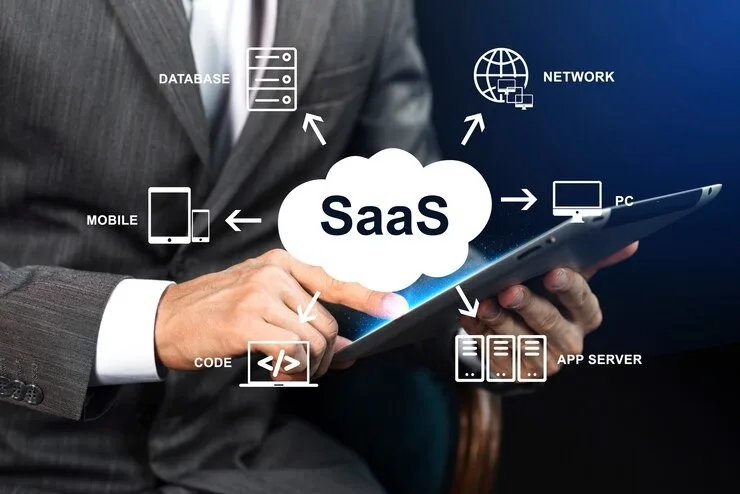
My point? Sometimes the 𝗳𝗹𝗲𝘅𝗶𝗯𝗶𝗹𝗶𝘁𝘆 𝗮𝗻𝗱 𝘀𝗰𝗮𝗹𝗮𝗯𝗶𝗹𝗶𝘁𝘆 𝗼𝗳 𝗮 𝗰𝘂𝘀𝘁𝗼𝗺 𝘀𝗼𝗹𝘂𝘁𝗶𝗼𝗻 are worth the upfront investment and it could be more cost-effective too.
Curious why SaaS may not be the perfect fit for your enterprise? Explore the gaps and challenges in our blog on why SaaS solutions often miss the mark in enterprise settings.
Also, you can discuss the options for deployment, technology stack, and above all your business needs.
Before making a decision, consider all the options and talk to an expert who can tailor a solution to your current needs and future goals.
Cremencing Solutions has helped clients find the right fit, and we have case studies available if you’d like to see the results firsthand.
Conclusion
The SaaS vs. Custom Solution for SAP ERP discussion becomes more useful when organizations treat it as an architecture and lifecycle decision rather than a simple software purchasing comparison. SaaS ERP can provide standardized processes and a provider-managed application lifecycle, while SAP S/4HANA environments can support business-specific requirements through governed extensibility, including on-stack development and side-by-side applications on SAP BTP.
For enterprise organizations, the practical objective is to determine which capabilities should remain standard, which requirements represent genuine business differentiation, and where custom functionality should run. SAP’s current clean-core direction makes this distinction increasingly important because extension architecture affects future upgrades, integrations, security, and technical debt. A sound evaluation therefore combines process fit, integration, security, total cost of ownership, and the long-term SAP roadmap rather than focusing on subscription or development cost alone.
FAQs
Is SaaS or a custom solution better for SAP ERP?
There is no universal answer because the appropriate architecture depends on process standardization, integration requirements, customization needs, SAP edition, security requirements, and lifecycle expectations. Many SAP S/4HANA landscapes use standard cloud ERP together with controlled on-stack and side-by-side extensions rather than choosing a completely standard or completely custom model.
Does SAP S/4HANA Cloud allow custom development?
Yes. SAP S/4HANA Cloud supports multiple extensibility approaches, including key-user extensibility, developer extensibility, and side-by-side extensibility on SAP BTP. Available capabilities and technical constraints depend on the SAP S/4HANA Cloud edition and the specific extension scenario.
What is SAP clean core?
SAP clean core is an architectural and governance approach that keeps the ERP core as standard and upgrade-stable as possible while allowing business-specific extensions through supported mechanisms. It emphasizes released APIs, extension points, appropriate development models, and reduction of unnecessary technical debt.
When Should Organizations Use SAP BTP for Custom Functionality?
SAP BTP can be appropriate when an extension needs to run independently from the S/4HANA core, combine SAP and non-SAP data, follow a separate application lifecycle, or implement processes that work better outside the ERP runtime. The architecture should be based on the business and integration requirements.
Is SAP ERP customization still relevant with SaaS?
Yes, but the form of customization has changed. Modern SAP architectures favor configuration and supported extensions over direct modifications of the ERP core. Depending on the SAP edition, organizations can use key-user tools, ABAP Cloud development, and SAP BTP side-by-side extensions.
Can custom SAP solutions reduce long-term ERP costs?
They can in specific circumstances, particularly when custom functionality addresses a high-value business process that would otherwise require expensive workarounds or multiple external applications. However, custom software also introduces development and maintenance costs, so the long-term financial result depends on the complete lifecycle and architecture.
What is the difference between on-stack and side-by-side extensibility?
On-stack extensions run within the SAP S/4HANA environment and are suitable when functionality needs close integration with the ERP application. Side-by-side extensions run separately, commonly on SAP BTP, and communicate with S/4HANA through supported remote interfaces. Many enterprise scenarios use both approaches.
What should companies evaluate before choosing SaaS ERP?
Organizations should evaluate business-process fit, SAP edition, integration requirements, APIs, extensibility, security, data ownership, reporting, vendor lifecycle, internal skills, implementation effort, and total cost of ownership. Evaluating these areas together provides a more realistic picture than comparing subscription pricing alone.