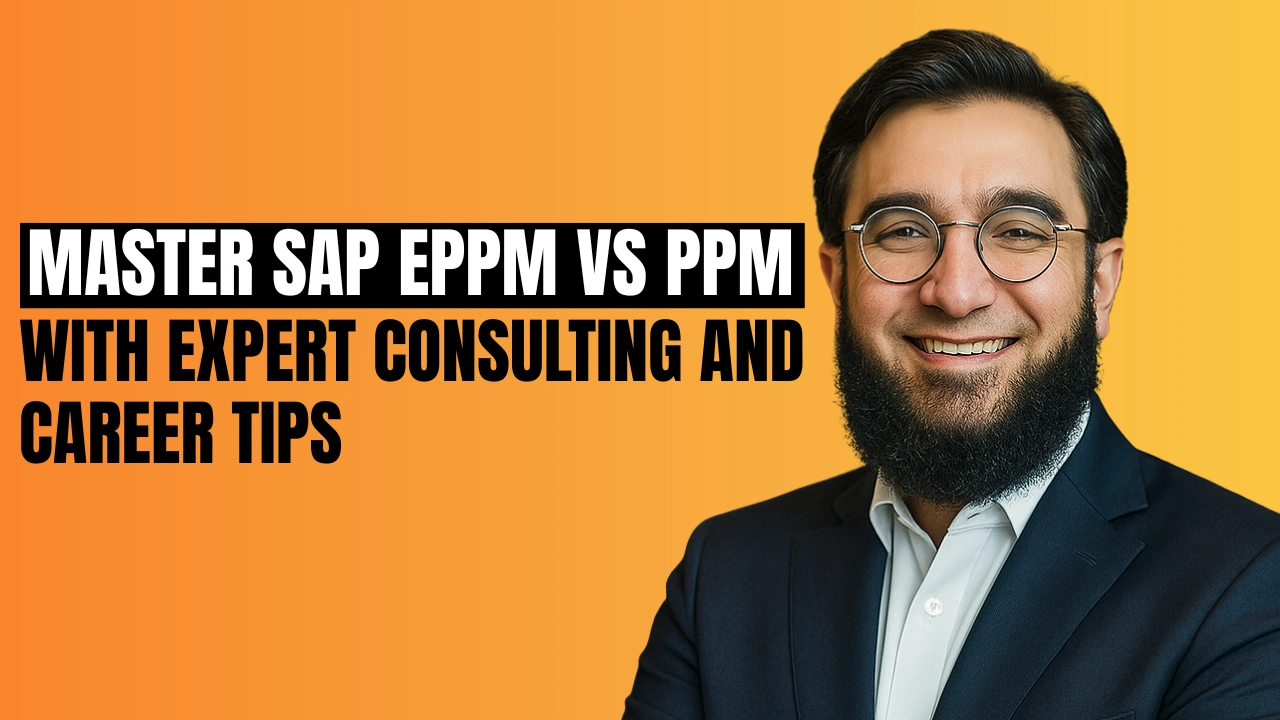
Selecting SAP EPPM vs traditional PPM isn’t just a technical choice; it’s a strategic one with project ROI, portfolio alignment, and even future SAP projects at stake. Both solutions are used for project and portfolio management, but the distinction between EPPM and PPM is frequently confused. SAP consultants and project managers who are able to quickly understand the differences between models have an advantage in their consulting projects and careers.
That’s what you’ll find in this guide: the key distinctions, insider consulting tactics, and career-building advice for people navigating the SAP project/portfolio management space.
Why Should I Care Anyway?
Conventional PPM tools provide users with capabilities to schedule and plan projects, manage resources, etc., for specific projects. SAP EPPM requires that portfolios, programs, and projects be combined into the same environment.
It is important to comprehend this difference as it has an impact on:
- How organizations rank projects and assign resources
- The amount of insight executives have in strategic projects
- How consultants sit in client meetings and interviews
SAP professionals who can explain the distinction between EPPM and PPM are viewed as strategic consultants, not just system installers.
Key Differences of SAP EPPM from Classic PPM
Scope and Integration
PPM tends to concentrate on isolated projects and programs with little to no real linkage across portfolios. SAP EPPM combines project, program, and portfolio management into enterprise operations such as S/4HANA so that executives get full visibility and can make decisions based on data insights.
Strategic Alignment
To align projects with business goals, EPPM connects directly to your corporate strategy. Evaluate initiatives by ROI, risk, and capacity across the portfolio. PPM, however, leans more toward executive execution by looking at individual projects without making them always match up with strategic focuses.
Analytics and Reporting
EPPM utilizes more modern analytics, dashboards, and BTP integration for predictive views. Traditional PPM can often be limited by a dependence on static reporting and an absence of real-time forecasting, which makes estimating risk and improving performance more difficult.
Resource and Risk Management
Whereas PPM consolidates resource management on a project basis, EPPM uses enterprise-level planning and predicts possible bottlenecks. Risk management in EPPM is leveraged more proactively and benefits from analytics to predict issues before they affect outcomes.
Collaboration and Document Management
EPPM introduces collaboration, version controls, and audit across the whole enterprise. Most PPM solutions manage collaboration at a project level, reducing visibility and knowledge exchange between teams.
For more, read our Blog: What is SAP EPPM & Why Top Enterprises Are Switching to SAP EPPM & How It’s Saving Them Millions?
The Insider’s Guide to Consulting for SAP Professionals
- Strategically position yourself: Focus on client engagements as well as portfolio-level discussions, rather than just project delivery.
- Demo BTP Knowledge: Highlight predictive analytics, reporting dashboards, and automation in proposals to consult on EPPM.
- Show That You Know Methodology: Familiarize yourself with frameworks for portfolio alignment, resource optimization, and risk mitigation — frequently asked in interviews.
- Illustrate ROI Impact: Have a plan for how to discuss the ROI impact of EPPM across multiple projects.
- Bridge the Function and Technology Gap: Integrate SAP S/4HANA finance, resources, and risk management with EPPM workflows; understand how to make the system communicate effectively.
Power Your Career with SAP:
Understanding the distinction between EPPM and PPM allows SAP professionals to:
- Interview Benefit: Employers quiz you on project portfolio strategy and technical integration knowledge.
- Consulting: Firms seek consultants who can help clients implement EPPM and show business value.
- Career Advancement: Competent EPPM practitioners gain visibility into senior decision-making, propelling them to leadership roles.
- Expertise Across Both Solutions: Experience in PPM and EPPM enables consultants to guide system choices and roadmaps.
How Cremencing Solutions Helps Customers with EPPM vs PPM Choices
Cremencing Solutions helps companies learn not only the tools but also the methodology for successful project portfolio planning:
- Compare SAP EPPM vs PPM functionality to select the correct solution
- Set up integration and flow for EPPM modules with S/4HANA and BTP
- Deliver dashboards, reporting, and predictive analytics for executive transparency
- Invest ROI back into best practices through training for teams and consultants
Our approach ensures that offerings are selected correctly and clients choose the right solution. Experience matters, and our consultants have a clear growth path.
Conclusion
The distinction between EPPM and PPM is crucial for SAP professionals to provide clear guidance in consulting engagements, interviews, and projects. SAP EPPM’s tightly integrated, analytics-centered approach to strategic visibility and resource optimization drives ROI, while traditional PPM continues to focus on execution-based project management.
Competent practitioners of EPPM best-practice methodologies and PPM comparison are trusted advisors to clients and are in high demand.
FAQs
- What are the fundamental differences between SAP EPPM and traditional PPM?
EPPM consolidates portfolios, programs, and projects into one system with strong analytics, strategic alignment, and resource management, while traditional PPM is execution-focused within single projects. - Why should you know about EPPM vs PPM for your SAP career?
It enables practitioners to market themselves as strategic partners, validate methodology expertise, and contribute to higher-level project portfolio management. - Is it possible for EPPM to collaborate with S/4HANA/BTP?
Yes, EPPM integrates with SAP S/4HANA for financial and operational data; BTP provides predictive analytics, dashboards, and automation. - How does it help in consulting engagements to know the difference?
Consultants can help clients determine the right solution, maximize ROI, and offer advice at a portfolio level rather than simply executing projects, delivering strategic value. - To whom does the knowledge of EPPM bring more advantages?
It’s ideal for project managers, PMO leaders, SAP consultants, and those seeking executive-level exposure or strategic advisory positions.